...

Blog Posts

18 minutes

16 March 2026

Medically reviewed by Dr Tavakoli.

Capsular Contracture and Dr Tavakoli’s Recovery Spray

We Proudly Utilise

motiva implants logo white
Mentor Logo TM White 0

Silicon Implants

Published By

Dr Kourosh Tavakoli

An Australian-trained plastic surgeon with over 20 years of experience, specialising in breast and body surgery. he is an internationally recognised lecturer in his field. 

Learn More
Have A Question?

Then why not book a consultation with one of our friendly female staff?

Sidebar Form

The two most common questions Plastic Surgeon Dr Tavakoli is asked by women considering breast augmentation mammoplasty is how long is the recovery and what are the future complications that can arise?

Dr Tavakoli has developed a recovery technique for breast augmentation mammoplasty, which means patients are quicker to be up and mobile after surgery. Despite this, patients should still be aware that recovery will take time, and you will need to take great care to follow instructions post-operatively to help minimise complications.

Light stretching is prescribed from day 2 and patients are often able to return to work between day 5 and day 7 posts op. This, however, will depend on the progress of your recovery and the physical nature of your work.

Crucial to the recovery technique is a spray solution developed by Dr Tavakoli which aims to reduce or eliminate the need for drains post operatively. This can help with post-op comfort and help lower (but not entirely remove) the chances of complications including capsular contracture.

Capsular contracture remains to this day, a common complication that can affect up to 20% of breast augmentation mammoplasty patients. It occurs when the natural capsule around the implant thickens and contracts, often distorting the shape of the implant and causing pain and discomfort.

Sub pectoral or dual plane placement and the introduction of micro textured implant as well as stringent surgical practices have helped reduce this overall figure.
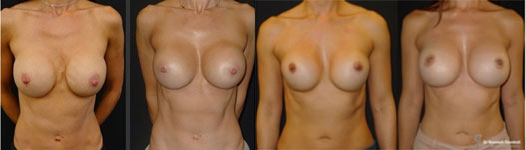
capsular contracture

Disclaimer: The outcomes shown are only relevant for this patient and do not necessarily reflect the results other patients may experience, as results may vary due to many factors including the individual’s genetics, diet and exercise.

*Before and after capsular contracture patients

Blood and fluid inside the breast pocket have been directly linked to post operative complications that affect both comfort (swelling, seroma, bruising) and aesthetic results (implant displacement, capsular contracture).

To overcome these issues, drains have been commonplace in primary breast augmentation mammoplasty patients. Whilst drains can be effective at removing the remaining fluid that can build up inside the pocket, they can be a source of discomfort and inconvenience for the patient.

No drain solution: Dr Tavakoli’s Recovery Spray

Made up of a combination of anti-bleeding medication and antibiotics, this intra-operative spray is applied directly into the breast pocket immediately prior to implant insertion.

An external four year retrospective study of Dr Tavakoli’s patients revealed a reduction in the rate of capsular contracture in patients who received Dr Tavakoli’s recovery spray.

Compliction No Spray Dr Tavakoli Spray
Capsular Contracture 4.3% 0.96%
Seroma 2.1% 1.3%
Haemotoma 0.37% 0
Significant swelling/bruising 0.5% 0

Dr Tavakoli has since been invited to speak about capsular contracture and the use of his “Recovery Spray” at international conferences including the recent ASAPS/NZAPS conference in August 2018. All of Dr Tavakoli’s breast augmentation mammoplasty patients are treated his “Recovery Spray”.

Breast Augmentation Mammoplasty Gallery – View before and after gallery

Our practice manager Jennifer offers complimentary consultations for primary breast augmentation mammoplasty and post-pregnancy surgery patients. During this appointment, Jennifer can talk you through the surgery and recovery process, as well as provide detailed costings and surgery availability. To book an appointment with Jennifer, please fill out this form.

Capsular Contracture Treatment Sydney: Advanced Solutions for Breast Implant Complications

Capsular contracture remains one of the most concerning complications following breast augmentation. When scar tissue around implants tightens and hardens, patients experience discomfort, distortion, and anxiety about their surgical outcome. Understanding this condition and accessing specialist plastic surgeon expertise in Sydney can make the difference between prolonged discomfort and the resolution of physical symptoms.

This comprehensive guide explores capsular contracture treatment options available in Sydney. We examine the Baker grading system, investigate underlying causes, and detail advanced surgical techniques designed to address breast implant hardening effectively. Our focus centres on evidence-based approaches that prioritise patient safety and clinical outcomes.

What Is Capsular Contracture? (Baker Grade I–IV)

The body naturally forms a protective capsule of scar tissue around any implant. This biological response represents normal healing. However, when the tissue around the implant becomes excessively thick or contracts abnormally, capsular contracture develops. The condition affects both saline and silicone breast implants, though incidence rates vary by implant type.

Plastic surgeons worldwide use the Baker grading system to classify severity. This standardised scale helps determine appropriate treatment approaches and enables clear communication between medical professionals and patients. The grading system ranges from Grade I (normal) to Grade IV (severe).

Grades I–II: When to Monitor

Baker Grade I represents the ideal outcome. The breast feels soft and appears completely natural. The capsule exists but remains thin and pliable. Patients cannot detect any difference from natural breast tissue, and no intervention is required.

Grade II presents minimal firmness that specialists can detect during examination. The breast shape remains normal, and patients rarely experience discomfort. Most cases require only monitoring through regular follow-up appointments. Surgical intervention is not typically recommended unless progression occurs.

Regular monitoring appointments allow early detection of changes. Specialist plastic surgeons assess breast shape, firmness, and symmetry during these reviews. Patients should report any new sensations of tightness or changes in breast appearance promptly.

Grades III–IV: When Surgery Is Required

Baker Grade III involves firm, palpable capsular tissue that patients can readily feel. The breast appears visibly distorted, with asymmetry becoming apparent. Discomfort may be present, and the unnatural firmness affects both appearance and confidence. Surgery becomes necessary to address these symptoms.

Grade IV represents severe contracture with hard, painful breasts showing obvious distortion. The breast feels rock-hard to touch, and patients often experience significant discomfort or pain. Immediate surgical intervention is recommended to relieve symptoms and restore breast shape.

Treatment for Grade III and IV cases typically involves capsulectomy (removal of scar tissue) or capsulotomy (releasing tight tissue), often combined with implant replacement. Advanced surgical techniques like those employed in Dr Tavakoli’s Rapid Recovery Technique can significantly reduce recurrence risk.

Concerned About Capsular Contracture?

Dr Tavakoli specialises in treating Baker Grade III–IV capsular contracture using advanced revision techniques. Schedule a clinical assessment to evaluate your specific Baker Grade.

Book an Assessment

Call 1300 368 107

What Causes Capsular Contracture?

Multiple factors contribute to abnormal scar tissue around breast implants. Research published on ncbi.nlm.nih.gov identifies several mechanisms that trigger excessive capsule formation. Understanding these causes helps patients and surgeons implement preventive strategies during initial breast augmentation and revision procedures.

Risk factors include bacterial contamination, surgical technique variations, implant characteristics, and patient-specific biological responses. No single factor accounts for all cases, making prevention strategies multifaceted. Current evidence suggests that minimising bacterial exposure and selecting appropriate implant types can reduce contracture risk.

Biofilm Theory

The biofilm theory represents the leading scientific explanation for capsular contracture development. Bacterial contamination during surgery allows microorganisms to adhere to the implant surface. These bacteria form protective biofilm communities that evade the body’s immune response and standard antibiotic treatment.

Even minimal bacterial presence can trigger chronic inflammation. The body responds by forming thick scar tissue in an attempt to isolate the perceived threat. This inflammatory response varies between individuals, explaining why some patients develop severe contracture while others with similar bacterial exposure do not.

Research demonstrates that specific bacterial species correlate with higher contracture rates. Staphylococcus epidermidis, a common skin bacterium, frequently appears in capsule tissue samples from contracture cases. Surgical protocols that minimise bacterial transfer show significantly reduced complication rates.

Advanced surgical techniques address biofilm risk through rigorous sterile protocols. The no-touch technique prevents implant contact with skin bacteria. Antibiotic pocket irrigation eliminates residual bacteria before implant placement. These evidence-based approaches substantially reduce bacterial contamination risk.

Haematoma & Seroma Risk

Haematoma (blood collection) and seroma (fluid accumulation) around implants increase capsular contracture risk substantially. These fluid collections create environments where bacteria multiply, and inflammation persists. Studies indicate that patients developing post-operative haematoma face contracture rates three to four times higher than those without bleeding complications.

Blood and fluid in the implant pocket trigger a prolonged inflammatory response. The body attempts to absorb these collections while simultaneously forming capsular tissue. This dual process often results in thicker, less pliable capsules that contract more readily.

Meticulous surgical technique minimises bleeding and fluid accumulation. Precise haemostasis (bleeding control) during surgery prevents haematoma formation. Proper pocket creation with minimal tissue trauma reduces seroma risk. Surgeons experienced in revision breast augmentation employ advanced techniques to avoid these complications.

Post-operative care also influences haematoma and seroma development. Patients receive detailed instructions about activity restrictions and compression garment use. Following these guidelines carefully reduces mechanical factors that might cause bleeding or fluid accumulation during initial healing.

Experiencing breast implant hardening or distortion? Contact our specialist team for expert evaluation.

Published Incidence Rates by Implant Type

Capsular contracture incidence varies significantly based on implant characteristics and placement location. Large-scale studies published on plasticsurgery.org provide evidence-based data that helps patients understand their individual risk factors. The Therapeutic Goods Administration (TGA) monitors implant safety data within Australia, ensuring regulatory oversight of devices used in breast augmentation.

Contemporary research indicates that implant surface texture, fill material, and surgical placement significantly influence contracture rates. Understanding these variables enables informed decision-making during initial augmentation and revision procedures. Specialist plastic surgeons discuss these factors during comprehensive consultations.

Implant Type Surface Texture 5-Year Contracture Rate 10-Year Contracture Rate
Smooth Silicone Smooth 8-12% 15-20%
Textured Silicone Textured 5-8% 10-15%
Smooth Saline Smooth 10-15% 18-25%
Form-Stable Silicone Textured 4-7% 8-12%

Implant placement location also affects contracture risk substantially. Submuscular placement (beneath the pectoral muscle) shows consistently lower contracture rates compared to subglandular positioning (above the muscle). The muscle layer provides protective coverage and improved blood supply that appears to reduce inflammation.

Recent Australian data mirrors international trends. Form-stable silicone implants with textured surfaces demonstrate the lowest contracture incidence. However, textured implants require careful monitoring due to rare but serious complications like implant rupture and associated risks that specialists discuss during consultations.

Individual patient factors influence contracture risk beyond implant selection. Smoking significantly increases complication rates across all implant types. Radiation therapy history, autoimmune conditions, and previous capsular contracture episodes elevate recurrence risk. Comprehensive pre-operative assessment identifies these factors to optimise surgical planning.

The specialist plastic surgeon team evaluates each patient’s unique risk profile. This assessment considers medical history, lifestyle factors, aesthetic goals, and previous surgical history. Personalised recommendations balance desired outcomes with realistic risk mitigation strategies for long-term results.

Dr Tavakoli’s Rapid Recovery Technique

(Note: Individual recovery times and clinical outcomes vary)

Advanced surgical protocols represent significant progress in capsular contracture prevention and treatment. Dr Tavakoli’s approach combines evidence-based techniques specifically designed to minimise infection risk and optimise healing. This comprehensive methodology addresses multiple risk factors simultaneously, reducing complications compared to standard surgical techniques.

The Rapid Recovery Technique emphasises bacterial contamination prevention, meticulous tissue handling, and strategic implant pocket preparation. Each component builds upon peer-reviewed research demonstrating superior outcomes. Patients benefit from reduced recovery time, lower contracture recurrence, and improved aesthetic results.

No-Touch Protocol

The no-touch protocol eliminates direct contact between the breast implant and potential bacterial sources. This technique prevents skin bacteria from transferring to the implant surface during insertion. Specialised surgical instruments are a protocol intended to address specific risk factors associated with bacterial contamination.

Implementation requires meticulous surgical planning and specialised equipment. The implant remains in sterile packaging until the precise moment of insertion. Protected insertion devices guide the implant into the prepared pocket without touching skin edges or non-sterile surfaces. This approach requires additional surgical time but delivers measurable risk reduction.

Studies comparing no-touch and traditional techniques show remarkable outcome differences. Capsular contracture rates decrease by approximately 60-70% when strict no-touch protocols are followed. These findings have transformed best-practice recommendations globally, with leading plastic surgeons adopting similar approaches.

Patient outcomes demonstrate the protocol’s effectiveness. Those treated with the no-touch technique experience a softer, more natural breast feel long-term. Revision surgery rates decline substantially, reducing both patient anxiety and additional procedure costs. The technique particularly benefits patients undergoing breast implant revision for previous contracture.

Antibiotic Pocket Irrigation

Antibiotic irrigation involves thoroughly washing the implant pocket with specialised antibiotic solutions before implant placement. This technique eliminates residual bacteria that might survive despite sterile surgical technique. The approach targets organisms that could establish biofilm colonies and trigger contracture development.

The irrigation solution combines multiple antibiotics selected for broad-spectrum bacterial coverage. Concentrations are carefully calculated to maximise bacterial elimination while maintaining tissue safety. The solution bathes all pocket surfaces, reaching areas where bacteria might colonise during tissue dissection.

Triple antibiotic solution demonstrates superior effectiveness compared to single-agent approaches. The combination typically includes agents targeting both gram-positive and gram-negative bacteria. This comprehensive coverage addresses the diverse bacterial species that potentially contaminate surgical sites despite rigorous sterile technique.

Clinical evidence supporting antibiotic irrigation continues expanding. Meta-analyses examining thousands of breast augmentation cases show significant contracture reduction when irrigation protocols are implemented. The technique adds minimal surgical time while providing substantial long-term benefit, making it standard practice among revision specialists.

How This Compares to Standard Technique

Traditional breast augmentation approaches involve direct implant handling and placement without specialised bacterial reduction protocols. While sterile technique is maintained, opportunities for bacterial contamination exist during standard procedures. The implant typically contacts skin edges during insertion, and pocket preparation may not include antibiotic irrigation.

Standard technique contracture rates range from 10-20% depending on implant type and patient factors. These rates reflect an adequate but not optimised surgical approach. Patients may develop complications despite skilled surgery and appropriate post-operative care, as standard methods don’t address all known risk factors.

Standard Technique Approach

  • Direct implant handling during insertion
  • Standard sterile technique without enhanced protocols
  • Minimal bacterial reduction measures beyond basic antiseptics
  • Pocket preparation without antibiotic irrigation
  • Contracture rates: 10-20% depending on implant type
  • Revision surgery is needed in a significant percentage of cases

Rapid Recovery Technique Approach

  • No-touch insertion with specialised instruments
  • Enhanced sterile protocols with multiple contamination barriers
  • Triple antibiotic pocket irrigation before implant placement
  • Meticulous haemostasis to prevent haematoma formation
  • Contracture rates: 3-6% based on implementation studies
  • Significantly reduced revision surgery requirements

The Rapid Recovery Technique’s comprehensive approach addresses multiple risk factors simultaneously. While no surgical method eliminates contracture risk entirely, evidence demonstrates substantial improvement over standard techniques. Patients seeking capsular contracture treatment in Sydney benefit from accessing surgeons implementing these advanced protocols.

Technique selection particularly matters for revision cases. Patients who developed contracture previously face a higher recurrence risk. Advanced protocols become even more critical in these situations. The combination of capsulectomy, implant exchange, and enhanced prevention techniques offers the best opportunity for successful long-term outcomes.

Experience Advanced Capsular Contracture Treatment

Dr Tavakoli’s Rapid Recovery Technique combines no-touch protocols, antibiotic irrigation, and meticulous surgical expertise. Discover how these evidence-based approaches can reduce your contracture risk and support recovery.

Schedule Your Consultation

Call 1300 368 107

Outcomes & Recovery

Recovery from capsular contracture surgery varies based on the extent and the individual’s healing capacity. Most patients experience significant improvement in breast softness and appearance following appropriate surgical intervention. Understanding the recovery timeline helps patients plan appropriately and maintain realistic expectations throughout the healing process.

Initial recovery typically spans two to three weeks for return to desk-based work. Physical restrictions continue for six to eight weeks to protect healing tissues. Complete healing and final results become apparent after three to six months when swelling fully resolves and tissues settle into their final position.

Immediate Post-Operative Period

The first 48 hours require rest and careful pain management. Patients experience swelling, bruising, and discomfort similar to that of initial breast augmentation. Prescription pain medication addresses discomfort effectively during this acute phase. Surgical drains may be placed temporarily to prevent fluid accumulation.

Compression garments support healing tissues and minimise swelling. Patients wear these specialised garments continuously for the first two weeks, then during daytime hours for an additional four weeks. Proper garment use significantly influences recovery comfort and final aesthetic outcomes.

Weeks 2-6: Progressive Activity Return

Most patients return to sedentary work within two weeks. Light activities gradually resume under specific guidelines provided during post-operative appointments. Upper body exercise remains restricted to prevent stress on the healing breast tissue and implant pocket.

Regular follow-up appointments monitor healing progress. The specialist plastic surgeon assesses incision healing, checks for fluid accumulation, and evaluates breast softness. Any concerns are addressed promptly to optimise outcomes and patient comfort throughout recovery.

Long-Term Results

Patients treated with advanced techniques like the Rapid Recovery approach demonstrate excellent long-term outcomes. Breast softness improves substantially compared to the pre-operative state. Natural appearance returns as swelling resolves and tissues adapt to revised implant positioning.

Contracture recurrence rates depend heavily on surgical technique and patient-specific factors. Studies show recurrence rates below 5% when comprehensive prevention protocols are implemented. Regular monitoring through annual follow-up appointments ensures early detection of any developing issues.

Additional procedures such as Acellular Dermal Matrix (ADM) placement may be recommended in complex cases. ADM provides additional implant coverage and can further reduce contracture risk. The decision to incorporate ADM depends on individual case requirements and previous surgical history.

Some patients require changing the implant pocket location during revision surgery. This approach moves the implant to tissue planes unaffected by previous scarring. Pocket conversion from subglandular to submuscular placement often improves outcomes in recurrent contracture cases.

Recovery Milestone Timeline Expected Outcome
Initial Healing 1-2 weeks Reduced acute pain, return to light activities
Moderate Recovery 3-6 weeks Return to most normal activities, ongoing softening
Advanced Healing 2-3 months Exercise clearance, significant softness improvement
Final Results 6 months Complete healing and clinical outcomes

Patient satisfaction rates following appropriately performed capsular contracture surgery remain high. Patients report renewed confidence and appreciation for the natural breast feel that advanced surgical techniques deliver.

Frequently Asked Questions

How soon after noticing breast firmness should I seek evaluation?

Schedule an assessment as soon as you notice persistent firmness or changes in breast shape. Early evaluation allows proper grading of severity and discussion of monitoring versus treatment options. Grade I-II contracture may only require observation, while Grade III-IV typically needs intervention. Prompt specialist consultation prevents progression and addresses concerns before symptoms worsen.

Can capsular contracture resolve without surgery?

Capsular contracture does not resolve spontaneously. Once scar tissue contracts significantly (Grade III or IV), surgical intervention becomes necessary to relieve symptoms. Non-surgical treatments lack evidence supporting effectiveness for established contracture. Early-grade cases may remain stable with monitoring, but progression requires surgical treatment for symptom relief.

What factors increase my risk of developing capsular contracture?

Multiple factors elevate contracture risk, including smoking, bacterial contamination during surgery, haematoma or seroma formation, radiation therapy history, and certain implant types. Subglandular placement shows higher rates than submuscular positioning. Previous contracture significantly increases recurrence risk. Specialist surgeons assess individual risk factors during consultation and recommend appropriate prevention strategies, including advanced surgical techniques.

Does capsular contracture surgery require general anaesthesia?

Yes, capsular contracture treatment typically requires general anaesthesia for patient comfort and clinical outcomes. The procedure involves capsulectomy, potential implant exchange, and meticulous pocket preparation. General anaesthesia ensures pain-free surgery and allows the surgeon to perform a precise technique without patient discomfort. The procedure typically takes two to three hours, depending on complexity and whether additional techniques like pocket conversion are needed.

How long do results from capsular contracture surgery last?

When performed using advanced techniques with comprehensive bacterial prevention protocols, capsular contracture surgery delivers long-lasting results. Recurrence rates drop below 5% with methods like the Rapid Recovery Technique. However, breast implants are not lifetime devices. Most patients require eventual implant replacement due to normal aging or personal preference changes, typically 10-15 years after surgery, regardless of contracture history.

Will insurance cover capsular contracture treatment in Australia?

Private health insurance may provide partial coverage for capsular contracture surgery when documented as medically necessary (Grade III-IV with symptoms). Coverage depends on your specific policy and waiting periods. Medicare provides limited rebates for revision procedures addressing complications. Our practice provides detailed cost estimates and assists with insurance documentation. Discussing financial aspects during the initial consultation ensures a clear understanding of the investment required.

Can I prevent capsular contracture after breast augmentation?

While no method guarantees prevention, several strategies significantly reduce risk. Choosing a specialist plastic surgeon who implements advanced protocols like the no-touch technique and antibiotic irrigation decreases contracture incidence substantially. Submuscular implant placement, appropriate implant selection, smoking cessation, and following post-operative instructions carefully all contribute to risk reduction. Discuss prevention strategies comprehensively during your consultation.

What is the difference between capsulectomy and capsulotomy?

Capsulectomy involves the complete removal of the scar tissue capsule surrounding the implant. This approach is preferred for severe contracture as it eliminates diseased tissue entirely. Capsulotomy simply releases or scores the tight capsule without removal. Capsulectomy generally provides superior long-term outcomes with lower recurrence rates, particularly when combined with implant exchange and advanced prevention techniques during revision surgery.

Additional questions about capsular contracture prevention or treatment? Our specialist team provides comprehensive consultations addressing individual concerns and treatment options.

Take the Next Step Toward Relief and Resolution of Physical Symptoms

Living with capsular contracture affects both physical comfort and emotional wellbeing. Persistent firmness, distortion, and anxiety about breast appearance diminish the quality of life unnecessarily. Advanced capsular contracture treatment options available in Sydney provide effective solutions backed by peer-reviewed research and proven surgical expertise.

Dr Tavakoli combines comprehensive training, international experience, and evidence-based techniques to address capsular contracture effectively. The Rapid Recovery Technique incorporates no-touch protocols, antibiotic irrigation, and a meticulous surgical approach that significantly reduces recurrence risk while optimising aesthetic outcomes. Patients benefit from specialist expertise focused specifically on complex revision cases.

Each patient’s situation requires personalised assessment and treatment planning. Factors, including previous surgical history, current symptoms, aesthetic goals, and individual risk profile, inform recommendation development. Comprehensive consultations ensure you understand all available options and can make informed decisions about your care journey.

The decision to pursue capsular contracture treatment represents an important step toward restoring comfort and confidence. Our practice provides a supportive, judgment-free environment where concerns are heard and addressed with compassion and expertise. We recognise the emotional impact of breast implant complications and prioritise both physical and emotional aspects of care.

What to Expect During Your Consultation

  • Comprehensive assessment of the current breast condition and symptoms
  • Review of previous surgical history and medical records
  • Discussion of treatment options, including surgical techniques
  • Examination to determine Baker grade and severity
  • Personalised recommendations based on individual factors
  • Detailed explanation of recovery timeline and expectations
  • Transparent discussion of costs and potential insurance coverage
  • Opportunity to ask questions and address concerns thoroughly

Why Choose Specialist Expertise

  • FRACS qualification with specialised revision surgery training
  • Extensive experience treating complex capsular contracture cases
  • Implementation of evidence-based surgical protocols
  • Access to advanced techniques, including ADM and pocket conversion
  • Comprehensive pre-operative assessment and planning
  • Dedicated post-operative care and long-term monitoring
  • Commitment to anatomically proportional results
  • Patient-centred approach prioritising safety and satisfaction

Recovery support continues well beyond surgery day. Regular follow-up appointments monitor healing progress and address any concerns promptly. Our team remains accessible throughout your recovery journey, providing guidance and reassurance when questions arise. This comprehensive care approach contributes to the high satisfaction rates our patients experience.

Interstate and international patients receive coordinated care that accommodates travel requirements. We assist with scheduling concentrated appointment sequences and provide detailed post-operative instructions for managing recovery away from Sydney. Telemedicine follow-up options support patients unable to return for in-person reviews.

Schedule Your Capsular Contracture Assessment Today

Don’t continue living with discomfort and distortion. Dr Tavakoli’s specialist expertise and advanced Rapid Recovery Technique offer effective solutions for Baker Grade III-IV capsular contracture. Book your comprehensive consultation to discuss personalised treatment options.

Book Your Assessment

Call 1300 368 107

Any surgical or invasive procedure carries risks. Before proceeding, you should seek a second opinion from an appropriately qualified health practitioner.

Schedule A
Consultation

Schedule A Consultation

Are Your Ready to Take The Next Step?

Contact Form
Dr Tavakoli requires video for accurate assessment for all BREAST procedures. View video instructions here

Schedule A
Consultation

Schedule A Consultation

Are Your Ready to Take The Next Step?

Contact Form
Dr Tavakoli requires video for accurate assessment for all BREAST procedures. View video instructions here